

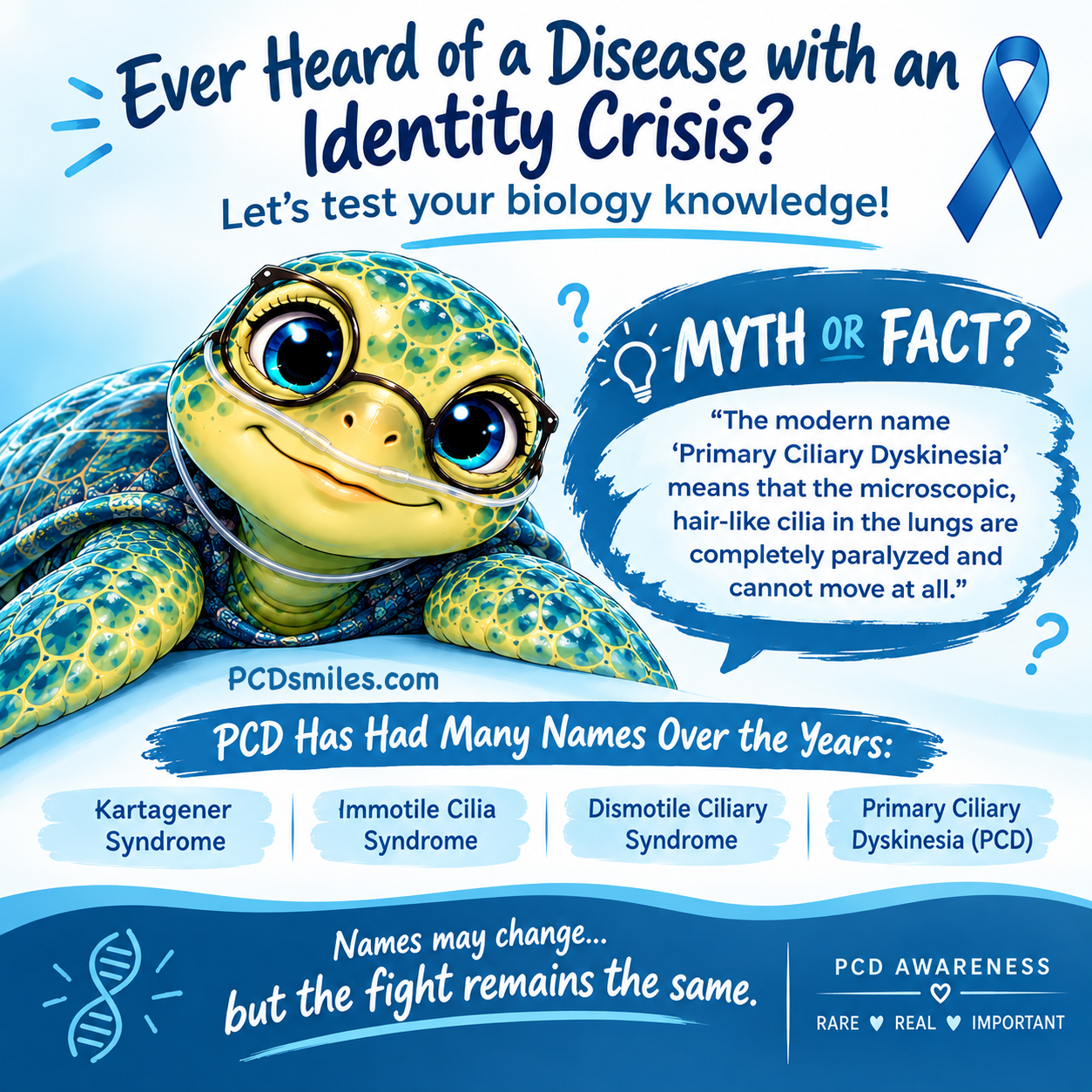
When most people hear Primary Ciliary Dyskinesia (PCD), they think about the lungs, chronic cough, or recurrent respiratory infections. But PCD can affect much more than breathing.
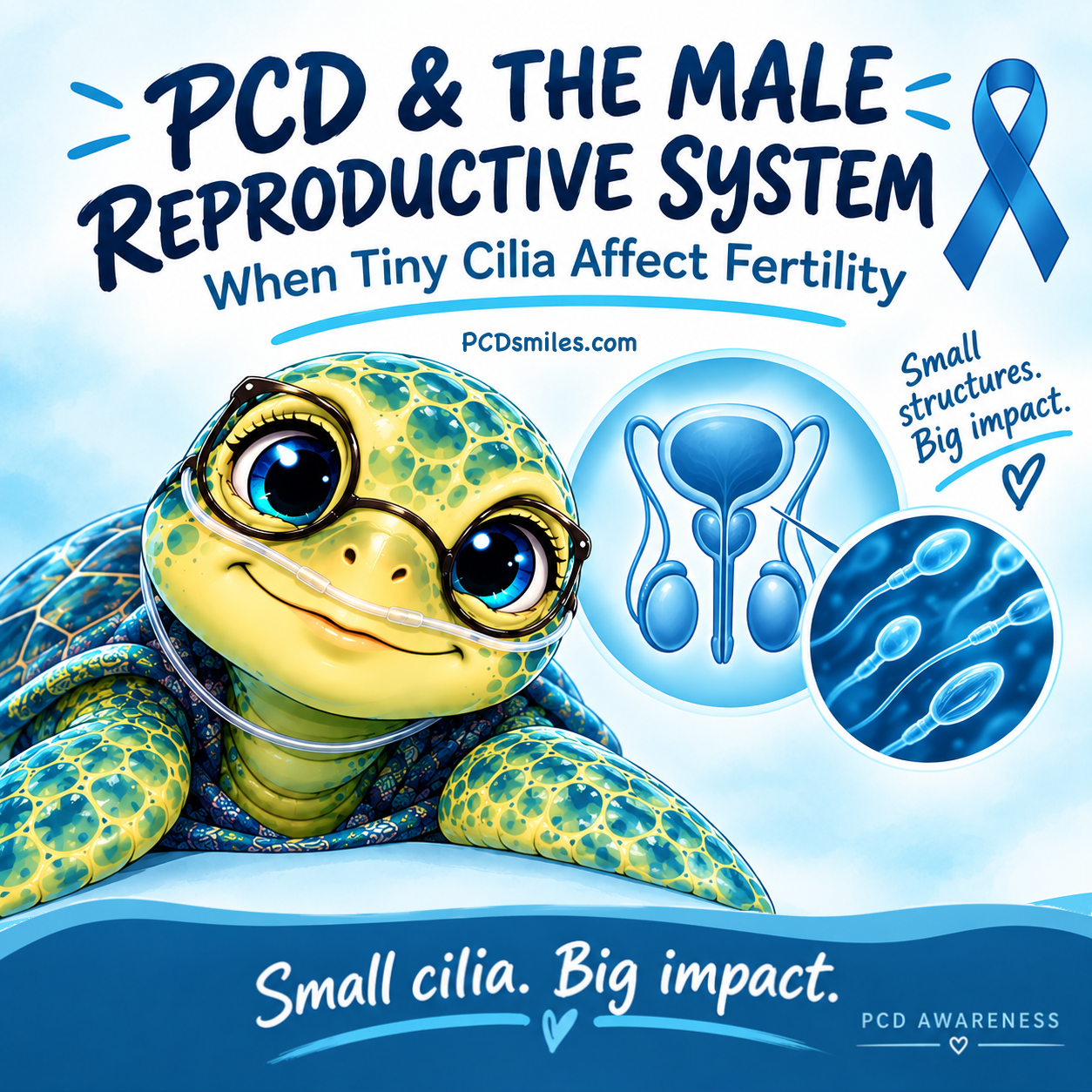
PCD is a genetic condition involving tiny, hair-like structures called cilia. These structures help move mucus, fluid, and other materials throughout the body. Related structures called flagella are also important in the male reproductive system because
they help sperm move.
When these microscopic structures don't work properly, their effects can extend into male reproductive health and fertility.
How Does PCD Affect the Male Reproductive System?
The male reproductive system depends on coordinated movement to transport sperm.
The reproductive tract includes structures such as the testes, epididymis, vas deferens, and seminal vesicles. Sperm are produced in the testes, mature in the epididymis, and are transported through the reproductive tract.
Sperm themselves have a tail-like structure called a flagellum. Its movement allows sperm to travel.
In PCD, abnormalities affecting ciliary and flagellar function can interfere with this movement.
Healthy movement matters
Think of sperm movement like a microscopic journey.
Healthy sperm flagella → effective movement → sperm can travel through the reproductive tract.
With PCD, that movement may be slower, weaker, or otherwise disrupted, making it more difficult for sperm to reach an egg.
This doesn't mean that every man with PCD will experience infertility. The effect can vary considerably from person to person.
PCD Can Affect Sperm Movement
One of the important reproductive effects associated with PCD is reduced sperm motility.
Sperm motility refers to how effectively sperm move.
When sperm cannot move normally, they may have difficulty traveling through the female reproductive tract to reach an egg.
This can contribute to reduced fertility or infertility in some men with PCD.
Other aspects of sperm health can also be affected, including characteristics such as sperm shape, count, or function.
More importantly, reproductive effects can vary. Some men with PCD may have significant fertility challenges, while others may still be able to father children.
It's Not Just About Sperm
PCD can also be associated with problems elsewhere in the reproductive system.
Because PCD involves abnormal ciliary function throughout the body, chronic infections or inflammation can potentially affect reproductive structures as well.
Some potential effects, include:
- Reduced sperm movement
- Lower sperm quality
- Inflammation involving reproductive organs
- Possible hormonal changes
- Reduced fertility or infertility
Some men may have no obvious reproductive symptoms and may only discover a fertility issue when testing is performed.
That's one reason awareness is so important.
What About Hormones?
Hormonal changes may also occur in some men with PCD.
There is the possibility of low testosterone or other hormonal changes.
However, reproductive health is different for every person with PCD. Hormone levels and fertility cannot be assumed based solely on having a PCD diagnosis.
When fertility concerns arise, appropriate testing can help determine whether sperm production, sperm movement, hormone levels, or another factor may be contributing.
PCD Does Not Mean Infertility for Everyone
One of the most important messages is that PCD does not automatically mean a man cannot have children.
Many men with PCD are still able to father children.
However, if conception becomes difficult, fertility evaluation can identify potential problems and help determine what options may be available.
Depending on the individual situation, evaluation may include semen analysis, hormone testing, and other fertility assessments.
Fertility support and treatment options may be available when needed.
Why Awareness Matters
PCD is often recognized because of respiratory symptoms, but its effects can reach beyond the lungs.
For men living with PCD, understanding the potential connection between abnormal ciliary/flagellar movement and reproductive health can help make conversations about fertility part of comprehensive PCD care.
It can also help explain why someone may experience difficulty conceiving even when there aren't obvious reproductive symptoms.
Most importantly, fertility challenges should not be viewed as a personal failure. They can be one of the ways that a genetic condition involving microscopic structures throughout the body makes its impact known.
Every Person With PCD Is Different
PCD doesn't affect everyone in exactly the same way.
Some men may have significant fertility problems. Others may have few or no noticeable reproductive symptoms.
That variation is important.
A PCD diagnosis does not tell you exactly what your fertility will look like.
If fertility is a concern, talking with a healthcare professional and receiving appropriate testing can provide much more information than the diagnosis alone.
The Bigger Picture
PCD is much more than a condition that affects the lungs.
The same underlying problem with microscopic structures can affect different parts of the body—including structures involved in male reproduction.
When sperm flagella don't move normally, sperm may have difficulty making the journey necessary for fertilization. For some men, this can contribute to reduced fertility or infertility.
But there is also an important message of hope:
PCD does not automatically mean infertility.
Understanding the connection between PCD and the male reproductive system can encourage earlier conversations, appropriate fertility testing, and access to available support.
Small structures. Big impact.
PCD may be rare, but its effects can reach into many areas of life—including reproductive health.
More awareness. More research. Better care. Brighter futures. 💙🐢
Be sure to join us tomorrow for another conversation about primary ciliary dyskinesia.
Join our Facebook group Turtle Talk Café today.
We have several ways that you can donate to PCD Smiles;
- Visit Smile E. Turtle's Amazon Wishlist
- For more information on how you can donate, please visit our "Donation" page to check out our "Do & Don't policies.
- Or sponsor a PCD Smiles cheer package today!
- To shop for your “Official” turtle care ribbon gear today, visit PCD Style
Thank you for your consideration!
Medical Disclaimer
This article is intended for general educational and informational purposes only and is not a substitute for professional medical advice, diagnosis, or treatment. Infection risks and appropriate prevention strategies can vary considerably between people with PCD based on their lung health, respiratory cultures, treatments, age, and other medical conditions.
Cleaning and disinfection recommendations for respiratory equipment can also vary by device and manufacturer. Always follow the instructions provided by your healthcare team and equipment manufacturer.
Do not start, stop, or change medications, airway-clearance treatments, infection-control practices, or other aspects of your medical care based solely on this article. If you have PCD and are concerned about an infection, worsening respiratory symptoms, or possible exposure to a pathogen, contact your PCD or respiratory healthcare team for individualized guidance.
If you are experiencing severe or rapidly worsening breathing difficulties or another medical emergency, seek urgent medical attention.