

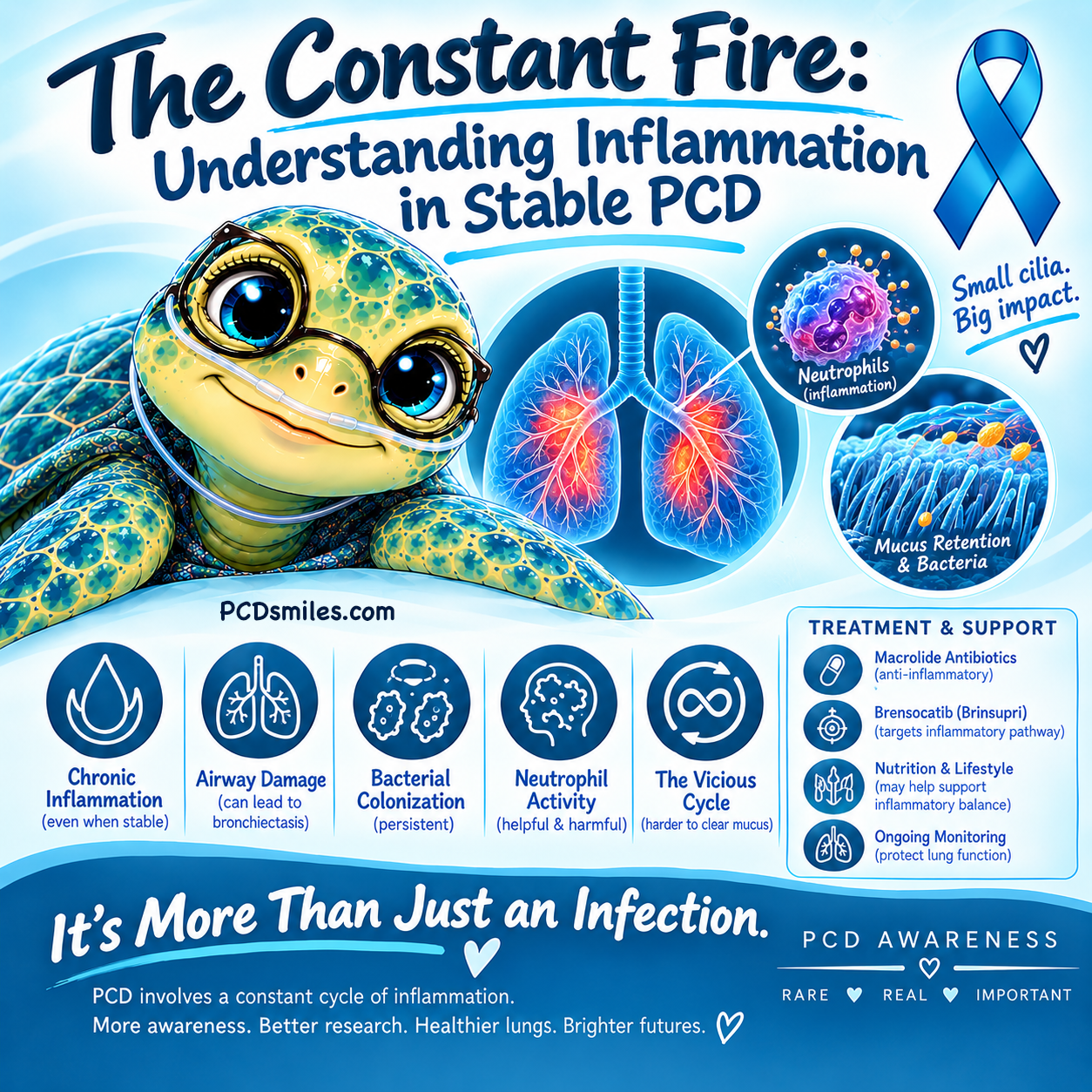

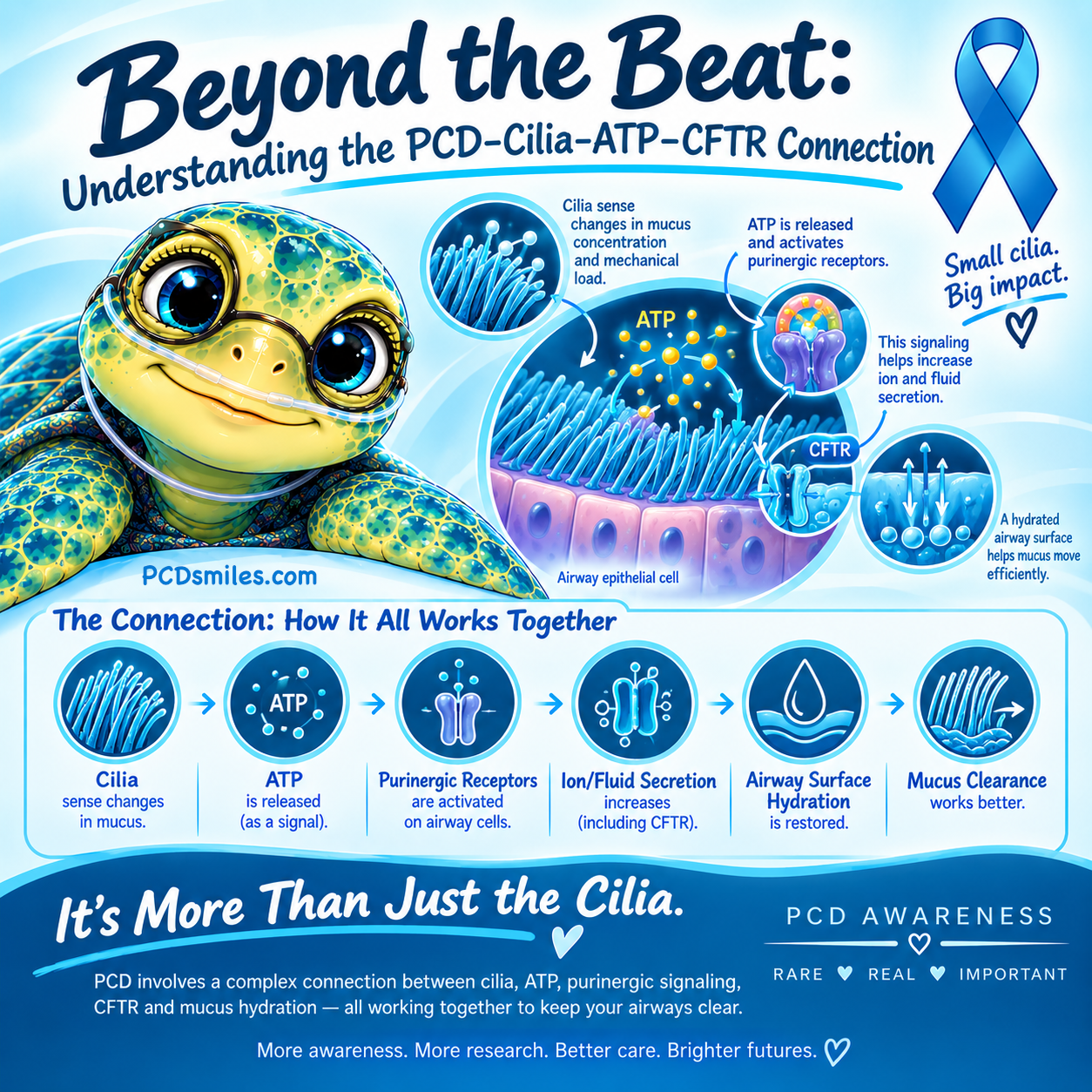
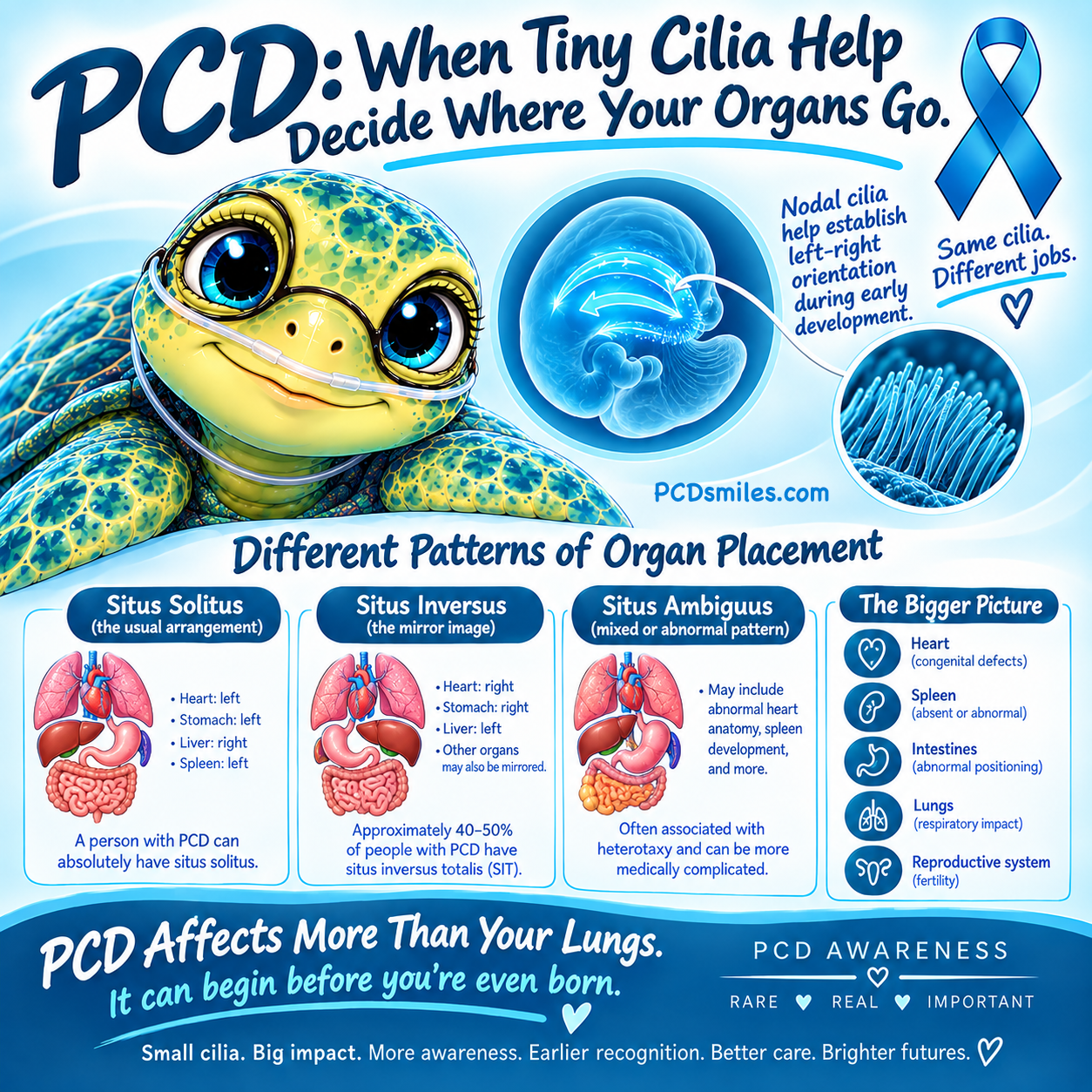
When people think about inflammation in Primary Ciliary Dyskinesia (PCD), they may picture an infection or a pulmonary flare—something that happens when a person is obviously sick.
But PCD can be more complicated than that.
Because the underlying problem with mucociliary clearance is always present, the airways can remain
in a state of ongoing inflammation even when someone feels relatively well and is considered clinically stable or "at baseline."
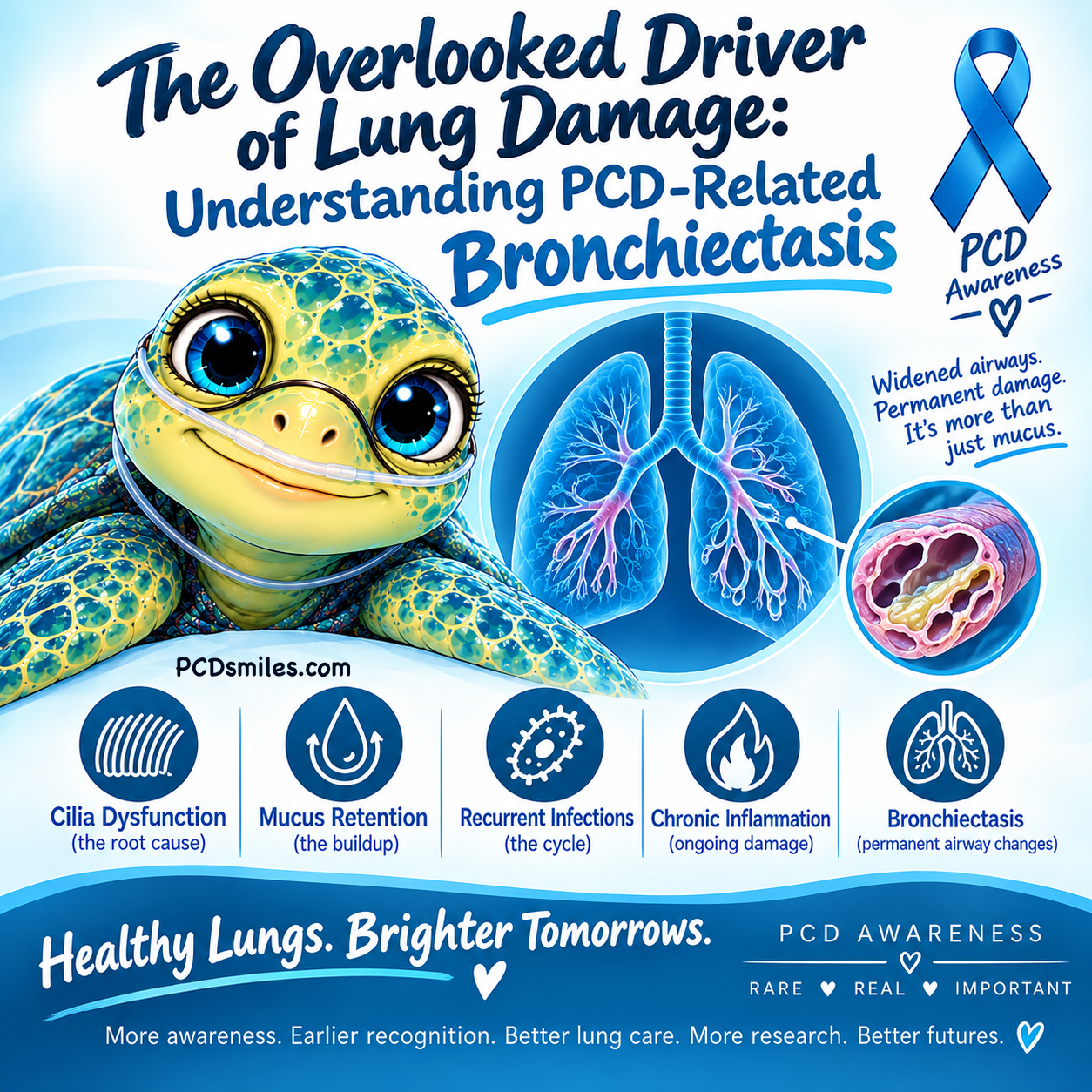
This persistent inflammatory process is closely connected to mucus retention, bacterial colonization, and progressive airway damage. Over time, it can contribute to bronchiectasis, a condition in which the airways become permanently widened and structurally damaged.
Think of it as a constant fire inside the airways—sometimes it flares dramatically, but even when the flames aren't obvious, the underlying process may still be smoldering.
The Vicious Cycle Inside the Airways
In healthy lungs, cilia continually move mucus and trapped particles out of the airways.
In PCD, dysfunctional cilia cannot perform that job effectively. Mucus can remain trapped, creating an environment where bacteria can persist.
The immune system responds by sending neutrophils, a type of white blood cell that plays an important role in fighting infection.
The problem is that persistent neutrophil activity can also contribute to tissue damage.
This can create a continuing cycle:
Impaired mucociliary clearance
↓
Mucus retention
↓
Bacterial colonization and infection
↓
Neutrophil-driven inflammation
↓
Airway tissue damage
↓
Bronchiectasis and worsening mucus clearance
↓
More mucus retention and inflammation
In other words, the problem doesn't necessarily disappear simply because a person isn't experiencing an obvious pulmonary exacerbation.
The inflammatory process can continue quietly in the background.
Why "Stable" Doesn't Always Mean "Inflammation-Free"
One of the important concepts emerging from PCD research is that clinical stability and biological stability aren't necessarily the same thing.
A person may feel relatively well, have no obvious acute infection, and be considered at their normal baseline while inflammation continues within the airways.
This matters because chronic inflammation can contribute to gradual structural changes in the lungs.
Over time, repeated inflammation and infection can damage the airway walls and contribute to bronchiectasis.
Bronchiectasis can then make it even more difficult to clear mucus, creating another link in the cycle.
The result is a disease process that can continue even between noticeable exacerbations.
Where Do Neutrophils Fit In?
Neutrophils are an important part of the body's immune defense. They help the body respond to bacteria and other threats.
But in chronic airway disease, persistent neutrophil activity can become damaging.
Neutrophils release enzymes and other substances designed to destroy pathogens. When this inflammatory response continues for long periods, some of those substances can also damage surrounding lung tissue.
This is particularly important in diseases characterized by chronic airway infection and inflammation, including PCD-associated bronchiectasis.
The result can be a difficult balance:
The immune system is trying to protect the lungs—but prolonged inflammation can also contribute to lung damage.
Why Are Low-Dose Macrolide Antibiotics Sometimes Used?
Long-term, low-dose macrolide antibiotics such as azithromycin may be prescribed in some people with chronic airway disease.
These medications are sometimes described simply as "prophylactic antibiotics," but that description doesn't capture the entire reason macrolides may be used.
Macrolides also have immunomodulatory and anti-inflammatory effects.
Rather than acting only as an antibacterial shield, they can influence inflammatory processes within the airways. Their effects include altering neutrophil behavior and reducing certain inflammatory signaling pathways. They may also affect mucus production.
This is an important distinction because the goal can involve calming chronic airway inflammation as well as reducing respiratory exacerbations.
Clinical research, including the BESTCILIA trial, has demonstrated that long-term azithromycin treatment can reduce pulmonary exacerbations in people with PCD.
The research therefore adds another piece to the puzzle: controlling the inflammatory environment may be an important part of managing chronic PCD lung disease.
Of course, long-term antibiotic therapy isn't appropriate for everyone. Decisions about its use, dosing schedule, risks, benefits, and monitoring should be made with a healthcare professional familiar with the individual's condition.
A New Frontier: Brensocatib
Another important development in the treatment of chronic inflammatory airway disease is brensocatib, marketed as Brinsupri.
Brensocatib represents a different approach because it targets the inflammatory pathway more directly.
It is a dipeptidyl peptidase 1 (DPP1) inhibitor.
DPP1 is involved in activating several neutrophil serine proteases, including neutrophil elastase.
Neutrophil elastase is an enzyme involved in the inflammatory response, but excessive activity can contribute to destruction of lung tissue.
By inhibiting DPP1, brensocatib works upstream, reducing activation of these neutrophil proteases.
The idea is significant:
Instead of simply responding to infections after they occur, researchers are targeting part of the inflammatory process that contributes to ongoing airway damage.
What Has the Research Shown?
The ASPEN phase 3 trial provided important evidence for brensocatib in non-cystic fibrosis bronchiectasis.
The study found that brensocatib reduced the rate of pulmonary exacerbations and showed evidence relevant to slowing decline in lung function.
This represents an important development for people living with bronchiectasis and chronic neutrophilic airway inflammation.
However, an important distinction should be made:
Brensocatib is a treatment for non-cystic fibrosis bronchiectasis; its role should not automatically be interpreted as a treatment specifically approved for PCD itself.
Because bronchiectasis is a common complication of PCD, research into therapies that target the inflammatory pathways involved in bronchiectasis may nevertheless be highly relevant to the PCD community.
This is an area where continued research is particularly important.
Can Food Help Control Inflammation?
Medical treatments aren't the only area being investigated when it comes to inflammation.
Dietary choices may also play a supporting role in overall inflammatory health, although they should not be considered a replacement for PCD treatment or prescribed airway-clearance and infection-management strategies.
Several nutritional approaches are of interest.
Omega-3 Fatty Acids
Omega-3 fatty acids, particularly EPA and DHA, are found in foods such as fatty fish.
Other sources of omega-3 fats include flaxseeds and walnuts.
These fatty acids participate in pathways involved in the body's inflammatory response, including pathways involving inflammatory leukotrienes.
A diet that provides adequate omega-3 fatty acids may therefore be one component of an overall approach to supporting healthy inflammatory regulation.
Antioxidant-Rich Foods
Chronic neutrophilic inflammation can generate reactive oxygen species, sometimes referred to as free radicals.
These molecules can contribute to oxidative stress and tissue injury.
Foods rich in antioxidants—including berries, dark leafy greens, foods containing vitamin C and vitamin E, and polyphenol-rich foods such as green tea—can contribute to the body's antioxidant defenses.
The Gut-Lung Connection
Researchers are also increasingly interested in the relationship between the gut microbiome and the lungs, sometimes called the gut-lung axis.
A diet containing adequate fiber can support beneficial gut bacteria. Fermented foods can also contribute microorganisms and compounds associated with a healthy gut microbiome.
Beneficial gut bacteria can produce short-chain fatty acids (SCFAs), which participate in immune regulation and have been studied for their potential effects on airway inflammation.
This area is still developing, and more research is needed to determine exactly how dietary patterns and the gut microbiome influence chronic airway inflammation in people with PCD.
Looking Beyond the Exacerbation
PCD is often discussed in terms of infections and pulmonary exacerbations: the times when symptoms suddenly become worse and medical treatment may be necessary.
But there's another side to the disease.
What happens between those exacerbations matters, too.
When cilia cannot effectively clear mucus, the airway environment remains vulnerable to mucus retention, bacterial colonization, and inflammation.
That ongoing process may contribute to progressive airway damage even when someone doesn't feel acutely ill.
Understanding this chronic inflammatory component may help explain why protecting lung function in PCD requires more than simply treating infections when they occur.
Airway clearance, appropriate infection management, monitoring of lung health, and individualized treatment strategies all remain important pieces of the bigger picture.
The Bigger Picture: From "Fighting Infection" to "Calming the Fire"
For years, much of chronic airway-disease treatment has focused on managing infections and clearing mucus.
Those things remain critically important.
But research is increasingly highlighting another question:
Can we also control the inflammatory processes that may continue damaging the airways even when an infection isn't obvious?
That question is driving research into treatments that influence neutrophils, inflammatory enzymes, mucus properties, and other components of airway biology.
For people living with PCD, this research could eventually lead to more targeted ways of protecting the lungs from the cumulative effects of chronic inflammation.
The goal isn't simply to put out the occasional flare.
It's to understand—and potentially control—the constant fire underneath it.
PCD isn't just about mucus and infections. It's also about what happens when the immune system keeps fighting in an airway that can't properly clear itself.
More research means more answers. More answers can mean better treatments. And better treatments can mean healthier lungs for people living with PCD.
Be sure to join us tomorrow for another conversation about primary ciliary dyskinesia.
Join our Facebook group Turtle Talk Café today.
We have several ways that you can donate to PCD Smiles;
- Visit Smile E. Turtle's Amazon Wishlist
- For more information on how you can donate, please visit our "Donation" page to check out our "Do & Don't policies.
- Or sponsor a PCD Smiles cheer package today!
- To shop for your “Official” turtle care ribbon gear today, visit PCD Style
Thank you for your consideration!
Medical Disclaimer
This article is intended for general educational and informational purposes only and is not a substitute for professional medical advice, diagnosis, or treatment. Infection risks and appropriate prevention strategies can vary considerably between people with PCD based on their lung health, respiratory cultures, treatments, age, and other medical conditions.
Cleaning and disinfection recommendations for respiratory equipment can also vary by device and manufacturer. Always follow the instructions provided by your healthcare team and equipment manufacturer.
Do not start, stop, or change medications, airway-clearance treatments, infection-control practices, or other aspects of your medical care based solely on this article. If you have PCD and are concerned about an infection, worsening respiratory symptoms, or possible exposure to a pathogen, contact your PCD or respiratory healthcare team for individualized guidance.
If you are experiencing severe or rapidly worsening breathing difficulties or another medical emergency, seek urgent medical attention.