
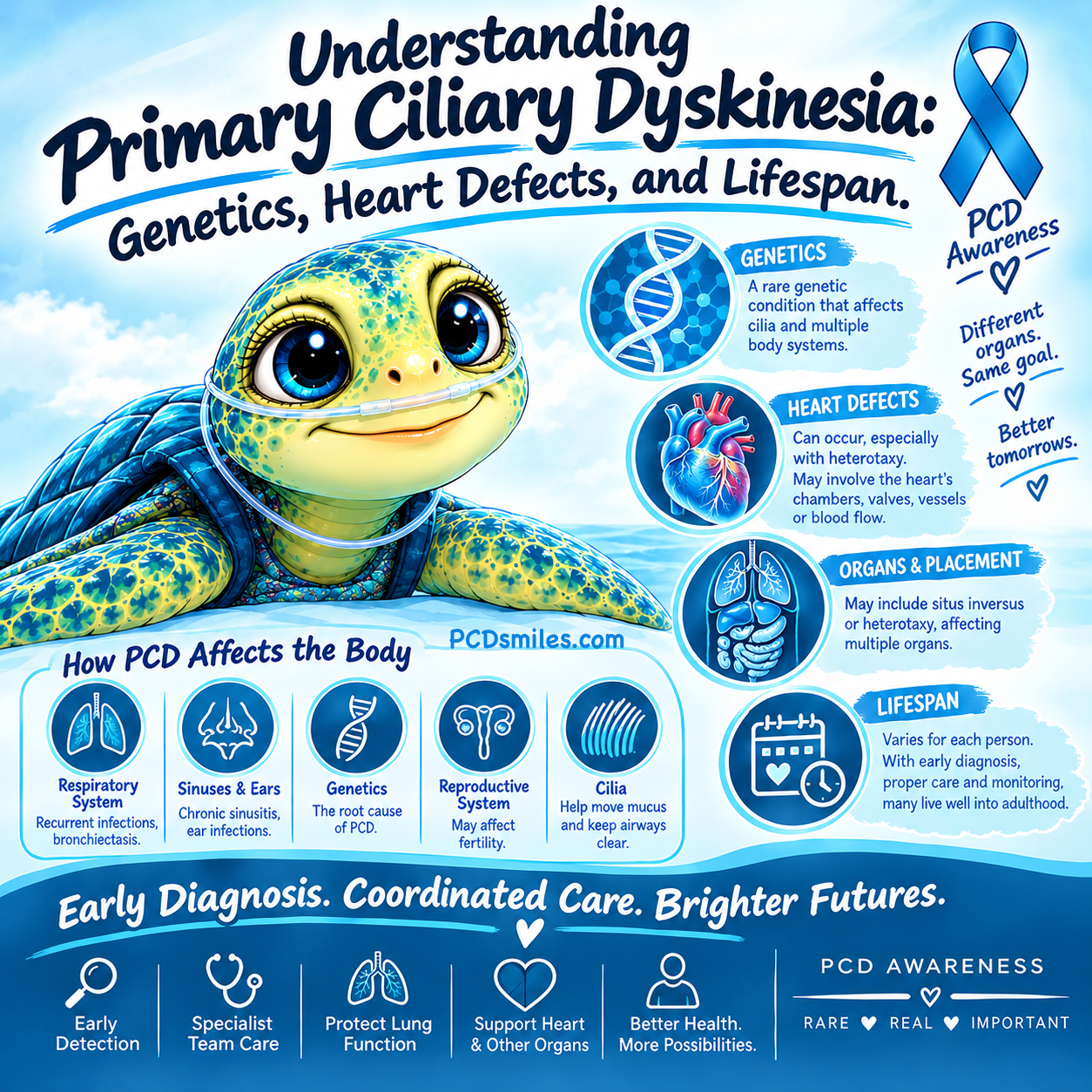
When people think about Primary Ciliary Dyskinesia (PCD), they often think about coughing, mucus, sinus infections, airway clearance, and bronchiectasis.
Nutrition may not be the first thing that comes to mind.
But for someone living with PCD, what the body receives from food and fluids can be
an important part of maintaining strength, supporting the immune system, recovering from illness, and managing the demands of chronic lung disease.
PCD is a genetic condition that affects motile cilia—microscopic structures that help move mucus and other substances throughout the respiratory tract and other parts of the body.
When those cilia don't work properly, mucus can become trapped in the airways. Recurrent infections and chronic inflammation can eventually contribute to bronchiectasis and other forms of lung damage.
That means the body may be working harder than it appears from the outside.
And that is where nutrition becomes important.
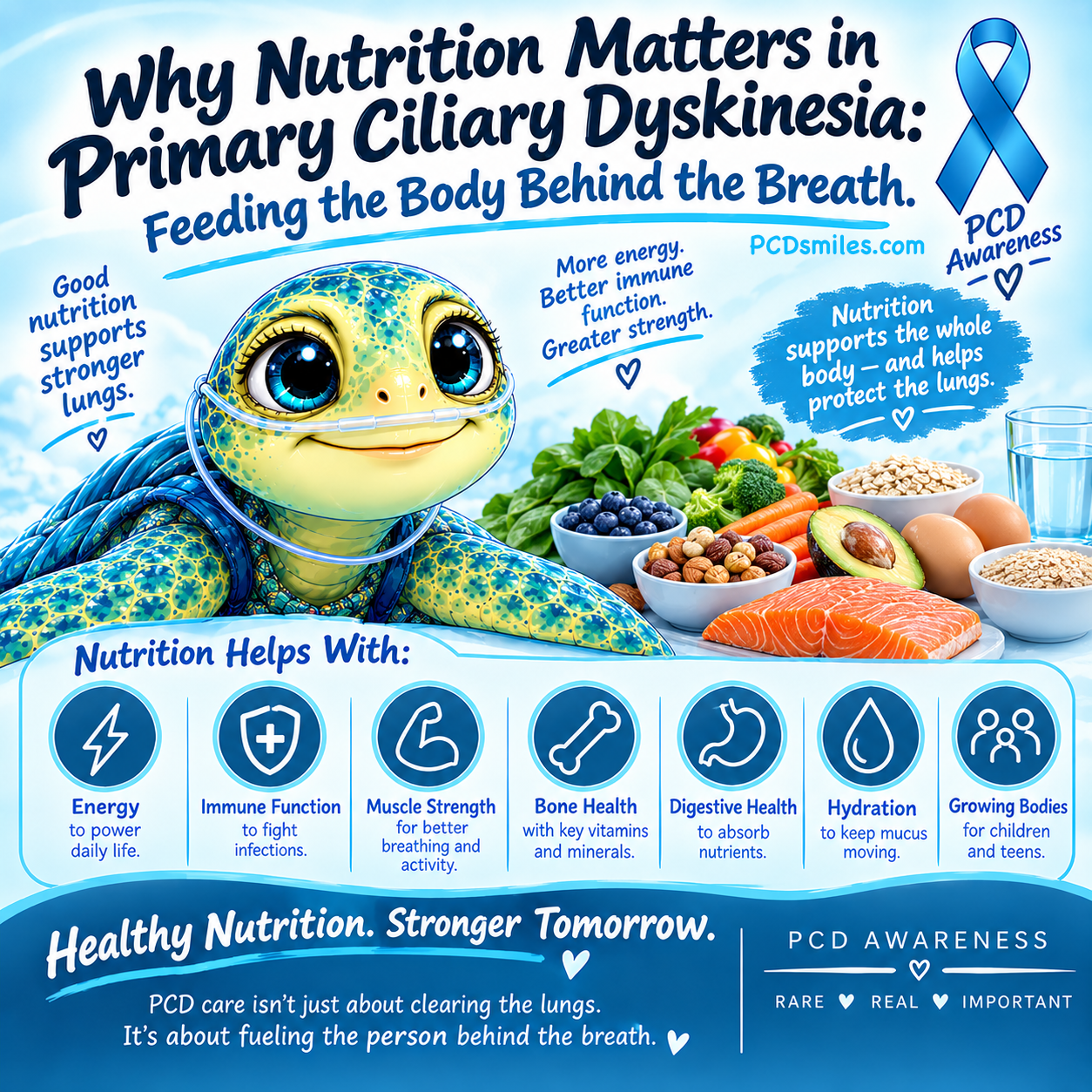
Nutrition Is Part of PCD Care
Nutrition doesn't replace airway clearance, antibiotics, respiratory medications, or other PCD treatments.
Instead, it supports the body while those treatments do their job.
Adequate nutrition helps provide the energy, protein, vitamins, minerals, and other nutrients needed to maintain muscles, support immune function, repair tissues, and recover from illness.
For some people with PCD, maintaining adequate nutrition can be relatively straightforward.
For others, chronic infection, increased work of breathing, fatigue, gastrointestinal symptoms, poor appetite, or frequent illness can make getting enough nutrition much more difficult.
There is no single "PCD diet."
The goal is individualized nutrition that meets the needs of the person—not a one-size-fits-all eating plan.
Breathing Takes Energy
Breathing is usually something we don't consciously think about.
But when the lungs are affected by bronchiectasis, mucus retention, inflammation, or infection, breathing can require more effort.
During respiratory exacerbations, that energy demand can increase even further.
At the same time, someone who is sick may have:
- Less appetite
- Increased fatigue
- Nausea
- More coughing
- Difficulty preparing meals
- Increased nutritional needs
That combination can make it difficult to consume enough food.
If the body doesn't receive enough energy and protein over time, it may begin using its own stored tissue—including muscle—for fuel.
That matters because respiratory muscles are muscles, too.
Maintaining muscle strength is an important part of maintaining overall physical function and supporting the work of breathing.
Protein Helps Protect Muscle
Protein is particularly important for people managing chronic illness.
It provides the amino acids needed to maintain and repair muscle and other tissues.
Good protein sources can include:
- Eggs
- Fish
- Poultry
- Lean meats
- Greek yogurt and other dairy products
- Beans and lentils
- Tofu and other plant proteins
- Nuts and seeds
The appropriate amount of protein depends on age, body size, activity level, kidney function, overall health, and other individual factors.
For someone who is losing weight or muscle, a dietitian may recommend strategies to increase protein and calories without requiring significantly larger meals.
Weight Is About More Than a Number
Weight and nutritional status can provide important information about overall health, but there is no ideal PCD body weight that applies to everyone.
A person's nutritional needs depend on many factors.
Being undernourished or losing weight unintentionally can be concerning because inadequate energy intake can contribute to muscle loss and reduced physical resilience.
But nutrition isn't simply about trying to reach a particular BMI.
The more important questions are:
Is the person maintaining a healthy amount of muscle?
Are they getting enough energy and protein?
Are they unintentionally losing weight?
Are they able to recover from infections?
Are they growing appropriately if they are a child or teenager?
Are they meeting their nutritional needs during periods of increased illness?
These are questions that can be evaluated by a healthcare team and, when needed, a registered dietitian.
Illness Can Change Nutritional Needs
Respiratory infections can be especially demanding for someone with PCD.
During an exacerbation, the body may be dealing with increased inflammation, increased work of breathing, and the energy demands of fighting infection.
At the same time, appetite may decrease.
This creates a nutritional challenge:
The body may need more support at exactly the time it becomes harder to eat.
That is why nutrition shouldn't only be addressed when someone has already become significantly underweight.
Having a nutritional plan in place before an illness occurs can make it easier to respond when appetite drops.
For some people, that may mean eating smaller meals more frequently.
For others, it may mean adding calorie- or protein-dense foods or using nutritional supplements when recommended by their healthcare team.
Vitamins and Minerals Matter
Calories and protein aren't the whole story.
The body also needs vitamins and minerals to support normal immune function, bone health, blood production, muscle function, and countless other processes.
Important nutrients can include:
- Vitamin D
- Calcium
- Iron
- Vitamin B12
- Folate
- Zinc
- Magnesium
- Other vitamins and minerals depending on the individual
This does not mean everyone with PCD needs a large collection of supplements.
In fact, taking unnecessary high-dose supplements can sometimes be harmful.
Instead, nutritional deficiencies should be identified through a person's diet, medical history, symptoms, and—when appropriate—laboratory testing.
Supplementation should be guided by a healthcare professional when a deficiency or increased need is identified.
Don't Forget Bone Health
Bone health is another important part of long-term care.
People with chronic respiratory disease may have risk factors for reduced bone density, including inadequate nutrition, low vitamin D levels, reduced physical activity, chronic inflammation, and certain medications.
Some people with PCD may also receive corticosteroids for particular respiratory or inflammatory problems, although steroid use is not universal in PCD.
Adequate:
- Calcium
- Vitamin D
- Protein
- Weight-bearing physical activity when medically appropriate
can all contribute to maintaining healthy bones.
For individuals at increased risk, healthcare providers may recommend additional monitoring or testing.
Hydration and Airway Clearance
Hydration is frequently discussed in connection with mucus.
Adequate fluid intake supports normal hydration throughout the body and may help keep respiratory secretions from becoming unnecessarily concentrated.
But drinking more water is not a substitute for airway clearance, and there is no specific amount of fluid that every person with PCD needs.
Fluid requirements vary according to age, body size, activity level, climate, medications, kidney and heart function, and other health conditions.
The goal is appropriate hydration—not forcing excessive amounts of fluid.
For people with medical conditions that require fluid restriction, hydration recommendations should come directly from their healthcare team.
When Eating Becomes Difficult
PCD can sometimes create challenges that make eating harder.
Frequent coughing or swallowing mucus may contribute to nausea or an uncomfortable stomach for some people.
During illness, appetite may fall.
Fatigue can make cooking difficult.
Some people may also experience gastrointestinal problems or have other medical conditions that affect eating and digestion.
In these situations, smaller, more frequent meals may be easier than trying to eat three large meals.
Other strategies may include:
- Adding protein to snacks
- Choosing nutrient-dense foods
- Using smoothies when appropriate
- Keeping easy-to-eat foods available
- Eating when appetite is best rather than waiting for traditional meal times
- Working with a dietitian when nutritional needs are difficult to meet
Persistent nausea, difficulty swallowing, unexplained weight loss, abdominal symptoms, or significant changes in eating should be discussed with a healthcare professional.
Children and Teenagers Have Additional Nutritional Needs
Nutrition is particularly important during childhood and adolescence because the body is still growing.
A child with PCD needs enough nutrition not only to manage chronic disease but also to support:
- Growth
- Bone development
- Muscle development
- Puberty
- Brain development
- Immune function
Growth should therefore be monitored over time rather than focusing on a single weight measurement.
If a child isn't gaining weight or growing as expected, the healthcare team may investigate whether chronic respiratory disease, inadequate intake, gastrointestinal issues, medication effects, or another factor is contributing.
A pediatric dietitian with experience in chronic respiratory disease can be an important part of the care team.
Nutrition During and After an Exacerbation
An infection doesn't necessarily end when antibiotics are finished.
Recovery can take time.
After a significant respiratory exacerbation, the body may need continued nutritional support while strength, appetite, and activity gradually return.
This is an important time to pay attention to:
- Weight changes
- Appetite
- Protein intake
- Hydration
- Muscle strength
- Activity level
- Ongoing gastrointestinal symptoms
If weight continues to fall or appetite doesn't return, the healthcare team should be informed.
What Does a PCD-Friendly Diet Look Like?
There isn't one specific diet that treats PCD.
Instead, think balanced, adequate, and sustainable.
A well-rounded eating pattern can include:
- Protein: eggs, fish, poultry, dairy, beans, lentils, tofu, nuts, and seeds
- Healthy fats: avocado, nuts, seeds, olive oil, and other unsaturated-fat sources
- Fruits and vegetables: a variety of colorful produce for fiber and micronutrients
- Whole grains and other carbohydrates: foods that provide energy and fiber
- Dairy or fortified alternatives: useful sources of protein, calcium, and sometimes vitamin D
- Fluids: enough to maintain appropriate hydration based on individual needs
The objective isn't perfection.
Consistency matters more than a perfect meal.
When Should a Dietitian Be Involved?
A registered dietitian can be particularly helpful when someone with PCD:
- Is losing weight unintentionally
- Has difficulty gaining weight
- Is struggling with growth
- Has low appetite
- Has significant gastrointestinal symptoms
- Has nutritional deficiencies
- Has increased nutritional needs
- Is recovering from a serious infection
- Has difficulty meeting nutritional needs through food alone
Nutrition should be considered part of the multidisciplinary approach to PCD care, particularly when nutritional challenges are present.
Nutrition Is Part of Protecting the Lungs
PCD is fundamentally a disorder of ciliary function.
Food cannot make dysfunctional cilia work normally.
Nutrition cannot replace airway clearance.
And no particular food can prevent every respiratory infection.
But nutrition can help support the person living with PCD.
Adequate calories can help provide energy.
Protein can help maintain muscle.
Vitamins and minerals support essential body functions.
Good nutrition can help provide the resources needed for recovery when illness occurs.
And maintaining nutritional health can contribute to overall strength and resilience.
The most important message is simple:
Don't wait until nutrition becomes a problem to start paying attention to it.
For someone living with PCD, protecting lung health isn't only about what happens in the lungs.
It's also about supporting the body that has to do the work of breathing, clearing mucus, fighting infections, recovering from illness, and living life every day.
PCD care isn't just about clearing the lungs. It's about fueling the person behind the breath.
Be sure to join us tomorrow for another conversation about primary ciliary dyskinesia.
Join our Facebook group Turtle Talk Café today.
We have several ways that you can donate to PCD Smiles;
- Visit Smile E. Turtle's Amazon Wishlist
- For more information on how you can donate, please visit our "Donation" page to check out our "Do & Don't policies.
- Or sponsor a PCD Smiles cheer package today!
- To shop for your “Official” turtle care ribbon gear today, visit PCD Style
Thank you for your consideration!
Medical Disclaimer
This article is intended for general educational and informational purposes only and is not a substitute for professional medical advice, diagnosis, or treatment. Infection risks and appropriate prevention strategies can vary considerably between people with PCD based on their lung health, respiratory cultures, treatments, age, and other medical conditions.
This article is for educational purposes and does not establish that over-thinning mucus causes increased infection risk in people with PCD. Responses to airway-clearance and mucoactive therapies vary. Any changes to prescribed treatments should be discussed with a healthcare professional familiar with PCD.
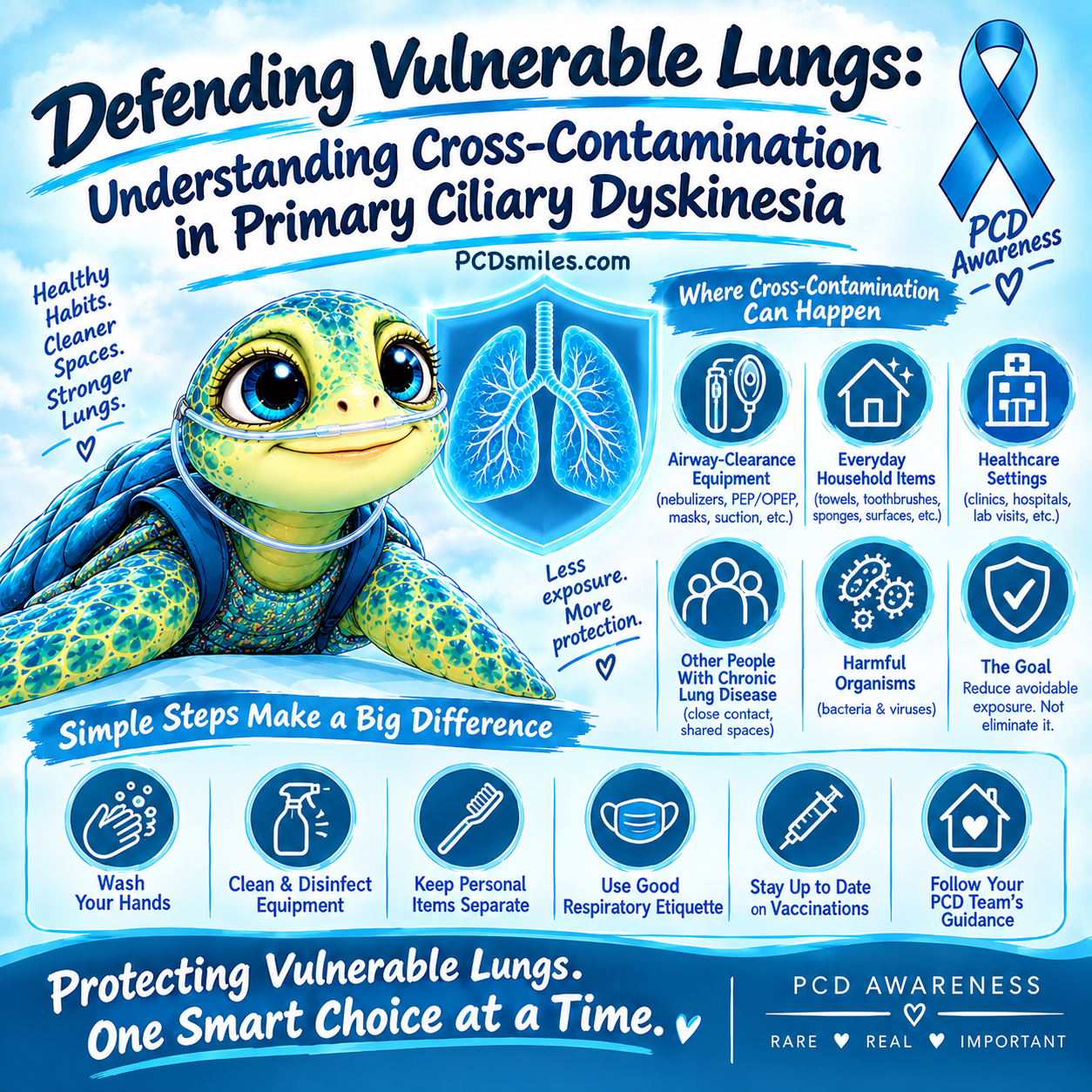
Cleaning and disinfection recommendations for respiratory equipment can also vary by device and manufacturer. Always follow the instructions provided by your healthcare team and equipment manufacturer.
Do not start, stop, or change medications, airway-clearance treatments, infection-control practices, or other aspects of your medical care based solely on this article. If you have PCD and are concerned about an infection, worsening respiratory symptoms, or possible exposure to a pathogen, contact your PCD or respiratory healthcare team for individualized guidance.
If you are experiencing severe or rapidly worsening breathing difficulties or another medical emergency, seek urgent medical attention.