
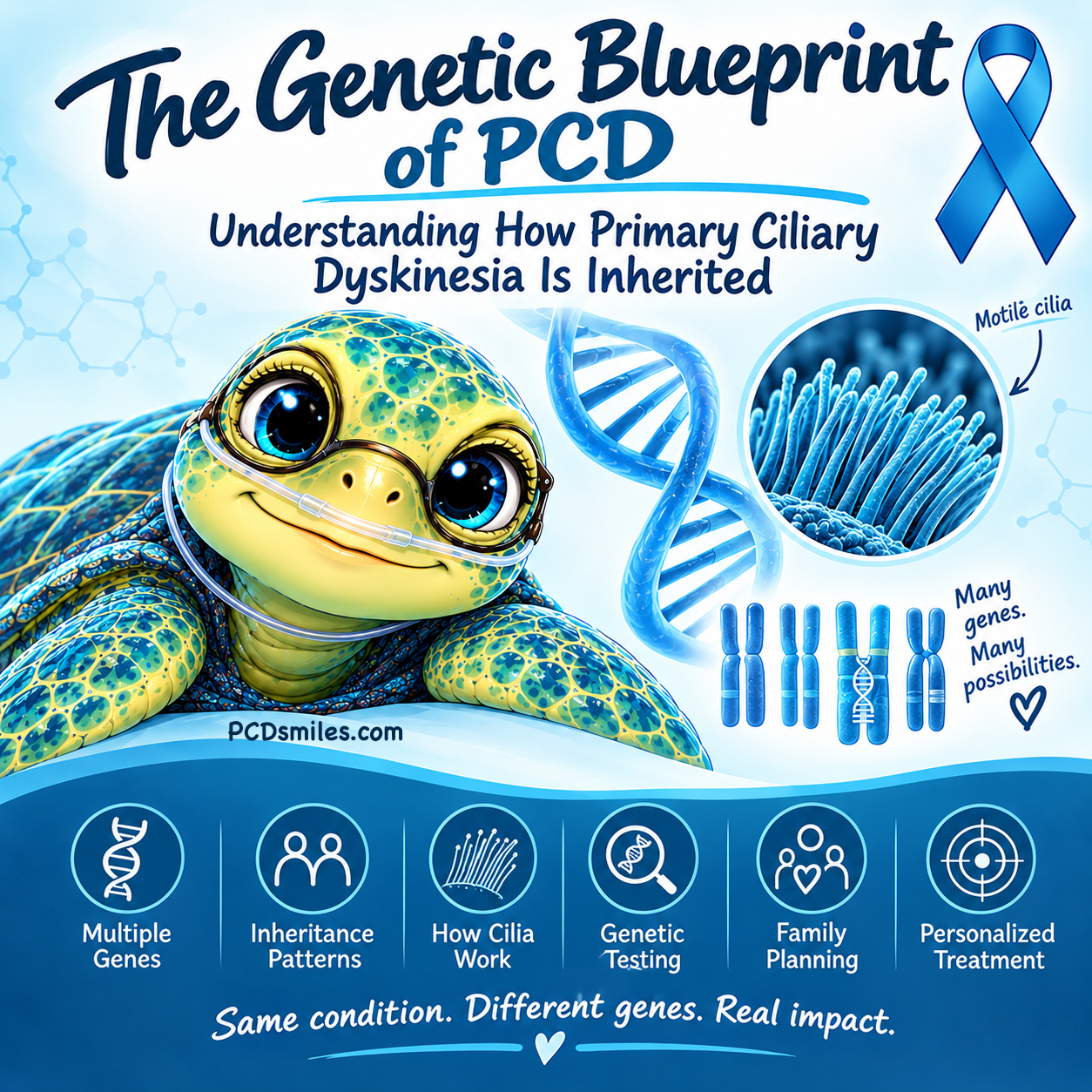
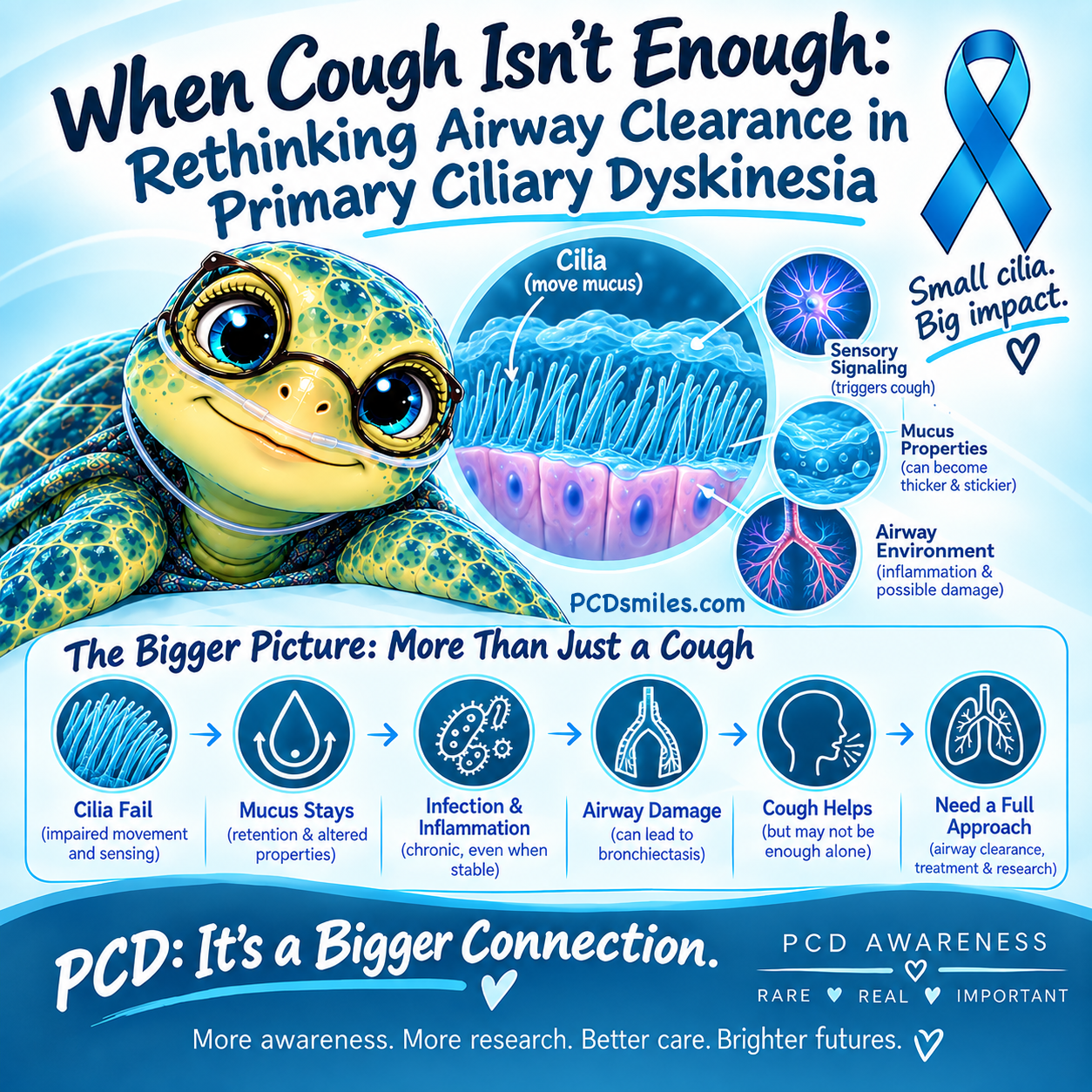
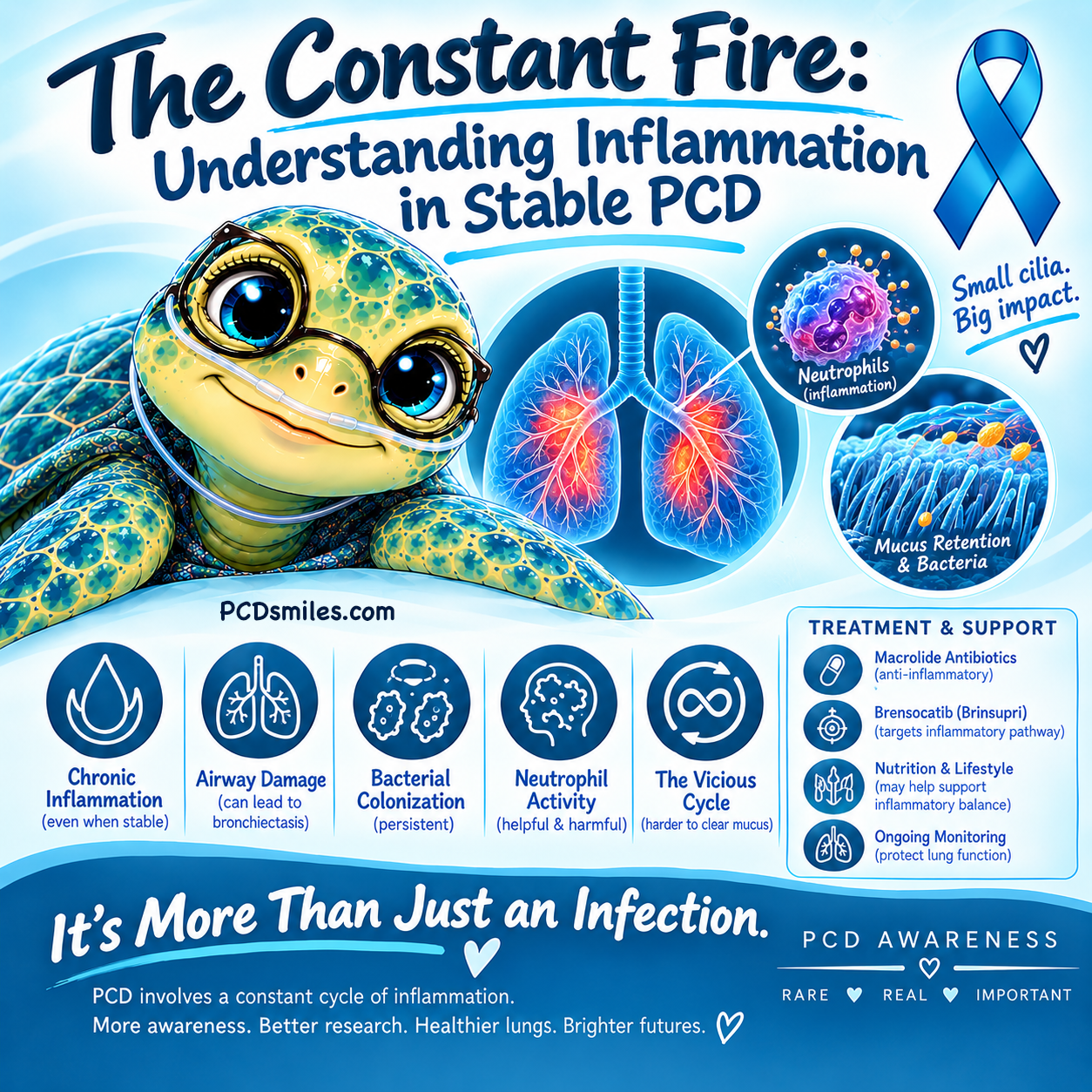
Primary Ciliary Dyskinesia (PCD) is a rare genetic disorder that affects the microscopic, hair-like structures known as motile cilia. These tiny cellular structures act like biological motors and are found in the respiratory tract, reproductive system, and fluid-filled spaces of the brain.
When genetic mutations disrupt the instructions needed to build or control these structures, the cilia may be
absent, move abnormally, or fail to coordinate their movement properly. The effects can include chronic respiratory disease, problems with organ placement, and fertility challenges.
Understanding how PCD is inherited can be complicated because the condition involves many different genes and, in rare cases, different inheritance patterns.
The Most Common Pattern: Autosomal Recessive Inheritance
For the vast majority of families, PCD follows an autosomal recessive inheritance pattern.
This means a person generally needs to inherit two altered copies of a PCD-associated gene—one from each parent—to develop the condition.
A typical example looks like this:
Carrier Mother (R/r) × Carrier Father (R/r)
- 25% chance: The child inherits two working copies of the gene and does not have PCD or carry the familial variant.
- 50% chance: The child inherits one altered copy and becomes a carrier.
- 25% chance: The child inherits two altered copies and develops PCD.
Why don't the parents usually have PCD?
Parents of a child with autosomal recessive PCD are typically carriers. They have one working copy and one altered copy of the relevant gene.
Because one working copy is generally sufficient for normal ciliary function, carriers typically do not have the disease themselves and may have no idea they carry a PCD-associated variant until a child is diagnosed.
Why can PCD occur more frequently in certain populations?
Because PCD is usually recessive, two people must carry disease-causing variants that can occur in the same gene.
This can make PCD more common in some geographically isolated or closed populations and in families or communities where certain genetic variants have been passed down through generations.
Consanguinity—having children with a biologically related partner—can also increase the likelihood that two people carry the same recessive variant.
Other Inheritance Patterns Can Occur
Although autosomal recessive inheritance accounts for most PCD, it isn't the only genetic pathway that has been described.
X-Linked Recessive PCD
A small number of PCD-associated mutations occur on the X chromosome.
Examples include variants involving genes such as PIH1D3 and RPGR.
Because biological males typically have one X chromosome, an altered copy of an X-linked gene can be sufficient to cause disease.
Biological females typically have two X chromosomes and may be carriers when only one copy carries the mutation. However, the effects of X-linked variants can vary depending on the specific gene and genetic circumstances.
Rare Autosomal Dominant Forms
Extremely rare cases involving autosomal dominant inheritance have also been reported.
In these situations, a single altered copy of a gene inherited from one parent may be sufficient to produce a PCD-like clinical phenotype.
These cases are unusual compared with the much more common autosomal recessive form.
PCD Is Not a Single-Gene Disorder
One of the most important things to understand about PCD is that it is genetically heterogeneous.
PCD can result from pathogenic variants in more than 50 different genes.
These genes provide instructions for proteins involved in building, assembling, regulating, and moving cilia.
Think of a cilium as a microscopic machine. Different genes provide the instructions for different components of that machine.
When one of those components doesn't work correctly, the resulting ciliary movement can be abnormal.
What Can Go Wrong Inside the Cilium?
The genetic changes associated with PCD can interfere with several important parts of ciliary structure and function.
Molecular Motors
Genes such as DNAI1, DNAH5, and DNAH11 are associated with components involved in the molecular machinery that generates ciliary movement.
Problems affecting these structures can interfere with the force needed to produce the ciliary beat.
Assembly and Preassembly Factors
Some PCD-associated genes encode proteins needed to assemble other ciliary components.
If these proteins don't function correctly, components may not fold or assemble properly before reaching the cilium.
The result can be a cilium that cannot be constructed or maintained normally.
Regulatory Structures
Other genes affect structures such as the radial spokes and central pair.
These structures are involved in coordinating ciliary movement—essentially helping control how, when, and in what direction the cilium moves.
Disruption of these systems can result in abnormal or poorly coordinated beating.
Why Genetic Testing Matters
The genetic diversity of PCD has historically made diagnosis challenging.
Traditional diagnostic approaches can include techniques such as electron microscopy and nasal nitric oxide testing. However, these tests do not identify every person with PCD.
For example, some people can have cilia that appear relatively normal structurally but have significant abnormalities in their movement or function.
Genetic testing has therefore become an important part of the diagnostic process.
Comprehensive genetic testing panels can identify disease-causing variants in approximately 70–75% of patients.
For some people, the genetic cause remains unidentified through standard testing.
More advanced approaches, including Whole Genome Sequencing (WGS), can help investigate cases that remain unresolved. These techniques may identify larger or more complex changes in DNA that can be missed by more targeted genetic panels.
Knowing the Gene Can Provide Valuable Information
Identifying the specific genetic cause of PCD can provide more than a diagnostic label.
It can help answer important questions about a person's condition and family.
Understanding Possible Clinical Differences
Certain genetic variants have been associated with differences in disease severity and progression.
Understanding a person's genotype may therefore help clinicians recognize individuals who could require particularly close monitoring and proactive management.
Family Planning
Knowing the specific genetic cause can help families understand how PCD was inherited and determine the potential risk of passing the condition to future children.
Genetic counseling can be especially valuable when discussing these risks.
The Future of Personalized Treatment
Genetic information may also become increasingly important as researchers investigate gene-based and mRNA-based therapies.
Some emerging treatments are designed around specific molecular or genetic abnormalities. A precise genetic diagnosis may therefore become important for determining whether someone could eventually qualify for a particular targeted treatment.
The Bigger Picture
PCD may look like a respiratory disease on the surface, but its origins begin much deeper—in the genetic instructions that build and control microscopic cellular structures.
The inheritance pattern is most often autosomal recessive, but rare alternative inheritance patterns have also been identified.
And because PCD can result from changes in many different genes, not everyone with PCD has exactly the same genetic or biological defect.
That genetic diversity helps explain why PCD can look different from one person to another.
Understanding the genetic blueprint behind PCD can help researchers improve diagnosis, help families understand inheritance, and potentially open the door to increasingly personalized treatments.
PCD starts with microscopic structures—but understanding the genes behind those structures could have a very big impact.
Be sure to join us tomorrow for another conversation about primary ciliary dyskinesia.
Join our Facebook group Turtle Talk Café today.
We have several ways that you can donate to PCD Smiles;
- Visit Smile E. Turtle's Amazon Wishlist
- For more information on how you can donate, please visit our "Donation" page to check out our "Do & Don't policies.
- Or sponsor a PCD Smiles cheer package today!
- To shop for your “Official” turtle care ribbon gear today, visit PCD Style
Thank you for your consideration!
Medical Disclaimer
This article is intended for general educational and informational purposes only and is not a substitute for professional medical advice, diagnosis, or treatment. Infection risks and appropriate prevention strategies can vary considerably between people with PCD based on their lung health, respiratory cultures, treatments, age, and other medical conditions.
Cleaning and disinfection recommendations for respiratory equipment can also vary by device and manufacturer. Always follow the instructions provided by your healthcare team and equipment manufacturer.
Do not start, stop, or change medications, airway-clearance treatments, infection-control practices, or other aspects of your medical care based solely on this article. If you have PCD and are concerned about an infection, worsening respiratory symptoms, or possible exposure to a pathogen, contact your PCD or respiratory healthcare team for individualized guidance.
If you are experiencing severe or rapidly worsening breathing difficulties or another medical emergency, seek urgent medical attention.